Merzouga and the Erg Chebbi: where to sleep by the dunes (campsite, van, desert camp)
The 48 spots around the Erg Chebbi, sorted: serviced campsites at the foot of the dunes, van stops, a night in a desert camp, and the far south towards Taouz. Prices, access and tips.
By the MoroVernight team · published 1 October 2026
The Erg Chebbi is the Sahara everyone pictures: a sea of orange dunes some twenty kilometres from north to south, with crests over 150 m high. The village of Merzouga sits on its western edge, at the end of the paved road down from Rissani. Within 35 km the directory lists 48 spots — the densest cluster in Drâa-Tafilalet. Here is how to find your way around, whether you travel by van, by car or with a backpack.
The lay of the land in 30 seconds
- Merzouga village and Dayet Srji (south-west of the erg): the biggest group of campsites, close to grocery shops and the seasonal lake that fills after the rains — flamingos then show up.
- The north, towards Hassilabied (6 to 8 km): a row of camp-inns set right against the sand, quieter, with the big dune just behind.
- The heart of the erg: tented camps reachable only by dromedary or by 4x4 with a guide.
- The south, towards Taouz (30 km): end of the tarmac, black stony plain as far as the eye can see.
By van or motorhome: campsites at the foot of the dunes
The easiest option: park a few metres from the sand, with showers, electricity and often a pool, and walk up the dunes at sunset. Based on the prices listed in the directory, expect 50 to 90 MAD a night.
In the village, Camp Ksar Sania (50 MAD), Les Roches (50 MAD), Le petit prince and La Gazelle Bleue (70 MAD) as well as Zebra (90 MAD) all have water, electricity, showers and a restaurant; the last three sit by Dayet Srji. The Lac de Sahara stop looks straight onto the lake. Further north, Camp Auberge Sahara (70 MAD), La Vallée des Dunes (60 MAD) and Océan des Dunes (50 MAD) are right up against the wall of sand; Tamariste and Kasbah Sable d'Or also run excursions.
Mind the access: several northern camps are reached by a short sandy track. A van gets through in dry weather, but drive slowly and never stop on soft patches. Each listing shows whether access is paved or by track.
A night in the dunes: desert camps
The classic: leave around 5 pm by dromedary (or 4x4), watch the sunset from a ridge, dinner and music by the fire, a night in a nomad tent, and up before dawn for sunrise over the sand sea. The Erg Chebbi desert camp is listed at 250 MAD; the "luxury camps" on the Rissani side, east of the erg, cost considerably more (private bathroom, proper beds).
Travelling by van? Leave it at your campsite (most will watch it overnight), take a small bag, and come back for a shower in the morning. For sunrise without a camp, the big dune is a 45-minute to 1-hour walk from the northern camps — bring a head torch.
Further on: Khamlia and the road to Taouz
South of Merzouga the road crosses Khamlia, known for its Gnaoua music, then runs to Taouz, the last village before the tracks to Ouzina. No serviced campsite here: you sleep with locals or in a nomad camp, with no guaranteed running water. The area is close to the Algerian border: stay on known tracks and ask locally before heading further.
Practical info
- Season: October to April. Summer goes beyond 45 °C; in December and January nights drop close to 0 °C. Spring brings sandstorms that can last a day.
- Fuel and supplies: fill up in Rissani or Erfoud; Merzouga only has grocery shops.
- Never drive onto the dunes: it is the surest way to get stuck, and dunes are a fragile environment.
- Waste: carry everything back to the village bins.
All 48 spots are on the map and on the Merzouga page. Stayed there? One click on "Were you there?" on the listing helps the next travellers.
The best-documented campsites
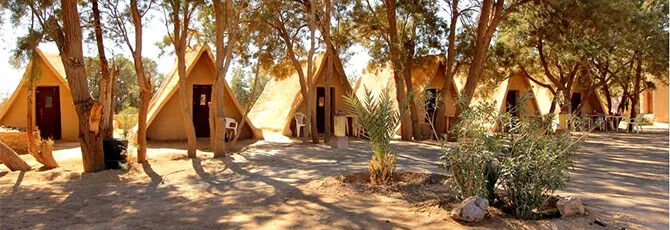 50 MAD/night
Camp Ksar Sania
 70 MAD/night
La Gazelle Bleu
 90 MAD/night
Camping Zebra - Merzouga
 50 MAD/night
Les Roches
 70 MAD/night
Camp Auberge Sahara
 50 MAD/night